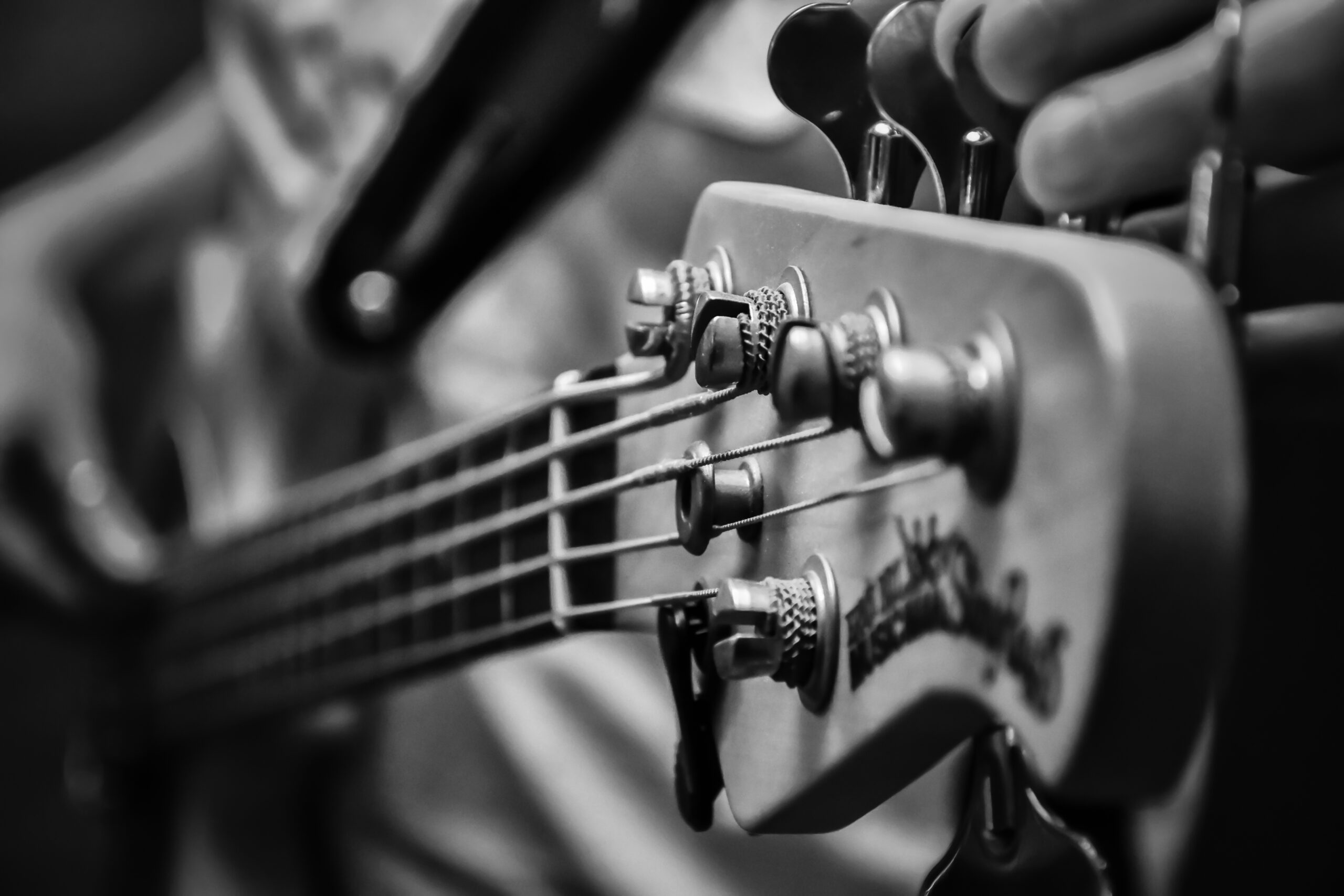
A few years ago I decided to learn the bass. I went to Long and McQuade, bought the prettiest one I could afford, and searched “beginner bass lessons” on Youtube. I quickly found a channel that was exactly what I was looking for: the videos were easy to follow, the presenter was engaging and funny, and after a few videos I was playing simple exercises along with him. For a couple of weeks I was practicing at least an hour every day, but quickly my dedication began to drop off and after a couple months I was barely playing at all. The reason behind this disengagement was simple: I was bored. I could follow along with the videos just fine, but when I tried to play a song I liked I was lost. And really, what is the point of playing an instrument if I couldn’t actually make music?
The core issues with the original video series were:
- Lack of support for learner autonomy, competence, and relevance. It didn’t show me how to play what I wanted to play, which was actual songs. I felt like I wasn’t improving fast enough, and the skills I did learn weren’t relevant to my goals.
- Almost entirely behavioural/rote learning. Any instrument requires a large amount of rote learning, but it is especially difficult to stay engaged when there is no face to face interaction.
- Little to no incorporation of cognitivism or connectivism. It was just me, by myself in my living room, playing scales in front of a screen.
Soon after I gave up on the video lessons, I joined a Discord server where fans of a bass player/Youtuber named Adam Neely could chat about music theory, share music, and collaborate on songs together. That’s where someone suggested I practice by improvising along to backing tracks instead of doing scales. I found a channel that had a huge library of backing tracks of different styles of music in different keys, and suddenly I was back to practicing almost daily. It wasn’t perfect, as most of the songs weren’t totally my jam, but I was finally making music.
So, how could the original video lessons incorporate what I learned when joining the Discord server to increase student engagement?
- To increase autonomy, competence and relevance, a list of songs from different genres that demonstrate the specific technique of each lesson would be a great start. This would allow students to start making music right away, as well as connecting the theory of the exercises to how they are used in various songs.
- Cognitivism involves students understanding material at a level beyond simple memorization, and linking a Discord server to the video series could incorporate this learning theory: if students don’t like any of the song suggestions at the end of the lesson, they could chat with other students to find other songs that fit the lesson plan, or even write their own. This requires a deeper understanding of the music theory behind each lesson (the “why” behind the “what”), encouraging students to apply their new skills to their understanding and appreciation of music.
- A discord server would also be a great tool to integrate connectivism into the lessons. Students could collaborate on songs together and co-write, share other musical skills and inspire one another. Building these connections and networks of support is invaluable to keeping music students engaged and excited about their instruments.
Learning music online can be lonely, but it doesn’t have to be. Through that Discord server I was able to collaborate with other musicians, and come up with some really neat stuff together. One of my songs, Little Seed, is a great example of what can come from fostering community online. I wrote a rhythmic hook, which another member turned into a bass line and recorded, then I added chords, melody, and lyrics, then another member helped me find the perfect sounding synth to use in the instrumental break, and we ended up with a really cool song in the end.
Little Seed by Paterson The Alien
Paterson on Vocals, Corvus on bass, Juniper on Synth

This was a really cool post, thank you for sharing your experience Paterson. As someone who has tried learning guitar before, I could completely relate to the frustration of wanting to play music that actually inspires you instead of only practicing the same beginner songs and chord progressions that every tutorial seems to focus on. That disconnect can really make learning feel more like a chore than an outlet, especially when the reason you picked up the instrument in the first place was because of the music you love listening to.
It’s incredible that you found a learning environment that matched your interests and motivation, your experience really highlights how important community and connection are in learning. The Discord server was more than just a place to ask questions, it was also a way to get feedback and share passion for music. I think that kind of network-based learning can make a huge difference because it feels more collaborative and personal.
It’s true that free resources like YouTube and Discord can make learning much more accessible, especially for people who may not have access to private lessons or music programs. At the same time, I wonder how people could create similar collaborative learning spaces offline if they preferred not to use online platforms. Maybe local jam sessions, community bulletin boards, or even informal park sessions could create that same sense of shared learning and motivation in person.
Your post really shows there are so many non-traditional ways to learn music, and the song you shared is a great example of it.
Thanks for reading! Yes, in person jam sessions are an integral part of the music community! Sadly real-time jamming isn’t feasible online since the time lag makes it impossible to make music simultaneously, but the Discord server where people share recorded bits and build on each others music is for sure as close as I have felt to a real like jam session 🙂
Hey Paterson, this was a great read and honestly really relatable. I had almost the exact same experience trying to teach myself programming through YouTube tutorials in first year. I’d grind through video after video but never actually build anything I cared about i actually talked about this in my first blog post too, and eventually I just stopped opening the tabs. The thing you said about playing scales alone in your living room versus jamming with people on Discord hit hard, that’s the part most tutorials completely miss.
Also the song was actually really good??!! Loved how the bass line and synth came together. Do you think you’d ever try to structure a Discord-style community around a school course, or do you think those communities only work organically when people show up because they want to be there?
I love the idea of Discord style course, and I think that would work especially well with a subject like programming! I’m sure there is something like that out there for learning to code, you should try searching!
And thanks, I am glad you liked the song! 🙂